What is Demi-Fine Jewellery? A Complete Guide to Affordable Luxury 2026
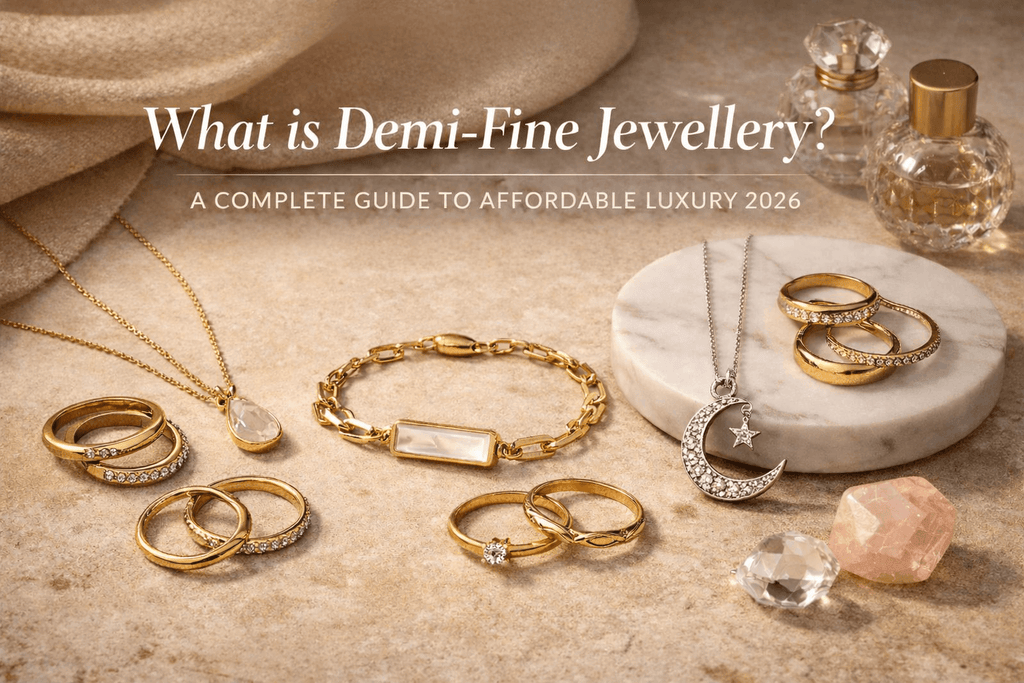
Not everyone wants to spend thousands on fine jewellery. But most people also don't want a ring that turns their finger green after a fortnight. For years, that left shoppers stuck choosing between two extremes — and then demi-fine jewellery quietly changed everything.
Demi-fine jewellery fills the space between costume jewellery and luxury fine jewellery. It's the category that lets you wear something that looks and feels genuinely beautiful, without needing to remortgage your home to pay for it. And over the last decade, it's gone from a niche concept to one of the fastest-growing segments in the entire jewellery industry.
In this guide, we'll break down exactly what demi-fine jewellery is, how it's made, what it costs, how long it lasts, and whether it's actually worth your money. No fluff — just everything you need to make a confident decision.
"Demi-fine jewellery is a category crafted using high-grade stainless steel, often set with semi-precious gemstones. It offers significantly higher quality and longevity than fashion jewellery, at a fraction of the cost of fine jewellery — making it the preferred choice for everyday luxury."

What Does Demi-Fine Jewellery Actually Mean?
The word 'demi' comes from French, meaning 'half' — and that's a pretty accurate description. Demi-fine jewellery sits halfway between fashion (or costume) jewellery and fine jewellery. Here's what that means in practice:
It's not fake jewellery pretending to be expensive. And it's not fine jewellery priced out of reach. It's a genuine middle ground — built to be worn, loved, and kept for years.
The Origin of Demi-Fine Jewellery
Here's something you won't find in most explainers: the term 'demi-fine jewellery' isn't centuries old. It was popularised relatively recently — somewhere between 2014 and 2016 — largely driven by a wave of direct-to-consumer jewellery brands that launched online.
Before this period, the jewellery market was fairly binary. You either bought fashion jewellery from the high street or fine jewellery from a traditional jeweller. Then came the DTC revolution. Brands built around minimalist design and accessible price points began carving out a new customer — millennials and Gen Z buyers who wanted quality, ethical sourcing, and everyday wearability without paying thousands for it.
Between 2014 and 2020, four shifts converged to create perfect conditions for demi-fine's rise:
The 'Affordable Luxury' Trend
The concept of spending smartly — more than throwaway, less than investment — accelerated across fashion, beauty, and lifestyle.
The Social Media Effect
Instagram and Pinterest made personal style more visible than ever, creating demand for pieces that photograph beautifully and are affordable enough to collect.
The Informed Consumer
Buyers became more educated about materials and manufacturing — asking better questions and expecting honest answers.
Conscious Consumption
The 'buy less, buy better' movement pushed people away from throwaway fashion jewellery towards pieces with genuine longevity.
Demi-fine jewellery was, in many ways, the industry's answer to all of these shifts at once. And the category hasn't looked back since.
What Materials Are Used in Demi-Fine Jewellery?
This is where demi-fine jewellery earns its distinction from fashion jewellery — and it comes down entirely to what's underneath.
The Base Metal: High-Grade Stainless Steel
Almost all genuine demi-fine jewellery starts with high-grade stainless steel as the base. It is exceptionally durable, resistant to corrosion, hypoallergenic, and provides a solid, quality foundation for the finished piece. Compare this to fashion jewellery, which typically uses brass, copper, or zinc alloy — metals that corrode quickly and can irritate the skin.
High-grade stainless steel (316L or surgical grade) is the metal of choice for quality demi-fine jewellery that prioritises durability. Its naturally polished finish makes it an ideal base for both plain and stone-set designs — and critically, it doesn't rely on a surface coating, so there's nothing to wear away.
Here's where metal grade really matters — and this is something most buyers never think to ask about:
| Material Type | Typical Finish | Expected Lifespan |
|---|---|---|
| Standard fashion plating (brass/zinc base) | 0.5 microns or less | Weeks to a few months |
| Entry-level demi-fine (basic plating) | 0.5–1 micron | 6–12 months |
| Good demi-fine (mid-grade) | 1–3 microns | 1–3 years |
| High-grade stainless steel (316L) | 2.5+ microns — no surface fade | 2–5+ years with care |
| Solid gold (fine jewellery) | N/A — solid throughout | Lifetime |
The difference between low-grade base metals and high-grade stainless steel is enormous in real-world wear. Stainless steel resists fading, tarnishing, and daily friction far better — which is why the metal grade is one of the most important things to ask about when buying.
Gemstones: Semi-Precious and Natural
Demi-fine jewellery typically uses semi-precious gemstones rather than the diamonds and rubies you'd find in fine jewellery. That said, 'semi-precious' doesn't mean low quality. Many semi-precious stones are genuinely beautiful and carry real value in their own right.
Common stones include blue topaz, white topaz, amethyst, citrine, garnet, moonstone, labradorite, malachite, turquoise, and freshwater pearls. You'll find natural stones set across our necklaces, earrings, and rings. Quality demi-fine jewellers use natural stones — not synthetic or simulated alternatives — and will always be transparent about what they use.
Demi-Fine vs Fine Jewellery: A Direct Comparison
Fine jewellery is the traditional category most people think of when they imagine 'real' jewellery — solid gold, platinum, precious gemstones. It's made to last generations and often treated as a financial asset. Here's how the two categories actually compare:
| Feature | Demi-Fine Jewellery | Fine Jewellery |
|---|---|---|
| Base metal | High-grade stainless steel (316L) | Solid gold / platinum |
| Gemstones | Semi-precious (natural) | Precious (diamonds, rubies, etc.) |
| Price range | Accessible mid-range | £500–£50,000+ |
| Durability | Excellent (years of daily wear) | Exceptional (lifetime) |
| Everyday wearability | Excellent — designed for it | Sometimes too precious to wear daily |
| Skin-friendliness | Hypoallergenic (316L grade) | Depends on alloys used |
| Investment value | Minimal | Can appreciate significantly |
| Heirloom potential | Limited | High — made to last generations |
The honest answer is that fine jewellery is built to last forever and often does. Demi-fine jewellery is built to look beautiful for years of real, everyday wear — which is a different but entirely legitimate purpose.
Demi-Fine vs Fashion Jewellery: Why It's Not the Same Thing
This is arguably the more important comparison — because the confusion between demi-fine and fashion jewellery is where most buyers get burned. Fashion jewellery (also called costume jewellery) is made with non-precious base metals, ultra-thin plating, and synthetic or no stones. It's designed to be affordable and trendy, not durable.
| Feature | Demi-Fine Jewellery | Fashion Jewellery |
|---|---|---|
| Base metal | High-grade stainless steel (316L) | Brass, zinc, copper alloy |
| Skin-safe? | Yes — hypoallergenic | Often not — can cause reactions |
| Tarnish resistance | Good to excellent | Poor |
| Typical lifespan | 1–5+ years | Weeks to months |
| Stones | Natural semi-precious gemstones | Synthetic / glass / none |
| Metal labelling | Yes — clearly stated | No, or vague ('metal alloy') |
Key giveaway: Clear metal labelling separates genuine demi-fine from fashion jewellery pretending to be more. Vague terms like 'silver-tone' or 'EP' (electroplated) mean you're not looking at genuine demi-fine — regardless of what the marketing says. Always look for '316L stainless steel' or 'surgical-grade stainless steel'.
Cost Breakdown: What Are You Actually Paying For?
One of the questions people rarely find answered is: where does the money actually go in demi-fine jewellery? Here's an honest breakdown of what you're paying for.
Raw Materials
High-grade stainless steel is notably cost-efficient as a raw material — a key reason demi-fine pieces can be priced accessibly. The quality of the steel grade and finishing process make a significant difference to the final product.
Gemstones
Natural semi-precious stones vary enormously in price. A small moonstone or white topaz might cost very little; rarer stones like alexandrite or fine labradorite can cost significantly more. Ethical sourcing and certification also add cost — but that's a cost worth paying.
Labour and Craftsmanship
Unlike fast-fashion jewellery made in bulk, quality demi-fine pieces often involve hand-setting stones, hand-finishing, and quality inspection at each stage. This skilled labour is a meaningful part of the price.
Brand Experience
Packaging, photography, and brand storytelling account for a significant portion of the price — particularly from lifestyle brands. This isn't a criticism; brand trust matters in jewellery. But it explains why two pieces with similar materials can differ in price.
"Buying from smaller, independent demi-fine brands can often offer better value per gram of gold — you're paying more for the jewellery and less for the brand overhead."
Is Demi-Fine Jewellery Worth Buying? An Honest Assessment
The short answer is yes — if you understand what you're getting. The longer answer depends on what you're looking for. Here's an honest, balanced look at where demi-fine jewellery excels and where it has real limits.
The sweet spot for demi-fine jewellery is someone who wants beautiful, real-feeling pieces for daily life, isn't looking to make a financial investment, and is happy to look after their pieces properly.
How to Identify Genuine Demi-Fine Jewellery
The demi-fine label is increasingly used as a marketing term — sometimes loosely. Here's exactly how to know you're looking at the real thing before you buy.
How Long Does Demi-Fine Jewellery Last?
Realistically? With proper care, a good demi-fine piece made from high-grade stainless steel should last anywhere from two to five years or more. Some people get much longer. It depends on several factors.
Factors That Affect Lifespan
The good news? Most reputable demi-fine brands offer replating or refinishing services. When your piece does start to look tired, you can often have it restored to near-original condition for a fraction of the original purchase price.
Common Myths About Demi-Fine Jewellery — Debunked
The materials are categorically different. Fashion jewellery uses low-grade base metals. Genuine demi-fine jewellery uses high-grade stainless steel — a fundamentally superior material. That's not a marketing difference; it shows up in how pieces wear, feel, and interact with skin over time.
High-grade stainless steel is exceptionally resistant to tarnishing — it's one of its defining advantages over both fashion jewellery and plated precious metals. If a piece described as stainless steel does tarnish quickly, it's likely a lower steel grade, not genuine 316L high-grade stainless steel.
The rise of transparent, independent demi-fine brands has made genuinely good jewellery accessible at a fraction of fine jewellery prices. What you need isn't a bigger budget — it's the knowledge of what to look for. Which is exactly what this guide is for.
Everyday wearability is, in fact, the entire point of demi-fine jewellery — it's built for it. The key is a little care: taking pieces off before swimming, before applying products. Treat it like something you value, and it will reward you with years of daily wear.
Who Should Buy Demi-Fine Jewellery?
Demi-fine jewellery isn't for everyone — and that's okay. Here's a clear look at who it's genuinely ideal for.
Everyday Wearers
If you put jewellery on every morning and don't take it off until bedtime, demi-fine gives you pieces that look beautiful and handle that lifestyle.
Minimalists & Stackers
The clean, refined aesthetic is perfect for building intentional, curated collections — Layered necklaces, stacked rings, ear cuffs.
Sensitive Skin
If fashion jewellery irritates your skin, the high-grade stainless steel used in these pieces is hypoallergenic and far kinder to sensitive skin.
Gift Buyers
Demi-fine jewellery sits in the sweet spot for gifting — feels luxurious and thoughtful, without the intimidating price tag of fine jewellery. Browse our bangles, bracelets and earrings for gifting ideas.
The Fashion-Forward Buyer
If you follow trends and want to update your jewellery wardrobe without devastating your budget, demi-fine is far more financially sensible than fine jewellery.
Not Ideal If…
You're looking for something to pass down through generations, hold financial value, or wear with zero care considerations — fine jewellery remains the better choice.
How to Care for Demi-Fine Jewellery
The lifespan of demi-fine jewellery is directly influenced by how you treat it. The good news is that proper care doesn't require much effort — just a few consistent habits. Think of demi-fine jewellery the way you'd think of quality leather shoes or a cashmere jumper: it rewards a small amount of ongoing attention with far greater longevity.
Rinse After Swimming
High-grade stainless steel is chlorine-resistant, but a quick rinse after the pool or sea is always good practice.
Put It On Last
Apply perfume, moisturiser, and hairspray before you put your jewellery on — not after.
Take It Off Before Bed
Especially rings and bracelets, which experience friction overnight. It takes 10 seconds and makes a real difference.
Clean Gently
A soft cloth wipe after wearing removes sweat and oils. Never use harsh jewellery cleaners designed for fine metals — these can affect the finish.
Store Properly
Store in an airtight pouch or box away from air and moisture. Exposure to air causes silver-tone finishes to tarnish faster.
Avoid Harsh Chemicals
Cleaning products, bleach, and even some hand sanitisers can accelerate wear. Remove jewellery before cleaning or using chemical products.
Final Thoughts
Demi-fine jewellery didn't emerge by accident. It grew out of a genuine gap — between jewellery that looked good and jewellery that was good — and it filled that gap with something that's genuinely valuable in its own right.
It won't replace fine jewellery, and it doesn't try to. What it does is give you beautifully crafted, real-material pieces that can be part of your everyday life — not locked in a box waiting for a special occasion. If you understand what you're buying, choose a brand that's transparent about materials, and give your pieces a little care, demi-fine jewellery is one of the most sensible and satisfying places to spend your jewellery budget.
A quick note on buying: Always look for jewellery that specifies high-grade stainless steel (316L or surgical grade), and buy from brands that are transparent about their materials. Those two steps alone will save you from the vast majority of demi-fine marketing that doesn't quite tell the whole story. Explore the Shivers Jewels range →
Frequently Asked Questions
1
What is demi-fine jewellery made from?
What is demi-fine jewellery made from?
Genuine demi-fine jewellery uses high-grade stainless steel (typically 316L or surgical grade) as its base metal. This is often finished with thick gold or silver plating and may incorporate natural semi-precious gemstones. The key distinction from fashion jewellery is the quality of the base metal and the transparency of the brand about what they use.
2
How long does demi-fine jewellery last?
How long does demi-fine jewellery last?
With proper care, quality demi-fine jewellery made from high-grade stainless steel can last two to five years or considerably longer. High-grade stainless steel doesn't rely on a surface coating, giving it a significant advantage over base-metal alternatives. The key factors are metal grade, how often you wear the piece, and whether you follow basic care habits.
3
Is demi-fine jewellery suitable for sensitive skin?
Is demi-fine jewellery suitable for sensitive skin?
Yes — high-grade stainless steel (316L grade) is hypoallergenic and widely considered one of the safest metals for sensitive skin. It's the same grade used in surgical instruments and medical implants. If you've experienced reactions to fashion jewellery in the past, demi-fine jewellery made from verified 316L stainless steel is a far better choice.
4
What's the difference between demi-fine and fine jewellery?
What's the difference between demi-fine and fine jewellery?
Fine jewellery uses solid gold or platinum and precious gemstones. It's made to last a lifetime and often treated as a financial asset or heirloom. Demi-fine jewellery uses high-grade stainless steel — delivering real quality, durability, and beauty at a fraction of fine jewellery prices. The trade-off: demi-fine won't hold financial value or last quite as long, but it's designed for everyday life in a way that fine jewellery often isn't.
5
Can I wear demi-fine jewellery in the shower or while swimming?
Can I wear demi-fine jewellery in the shower or while swimming?
High-grade stainless steel is significantly more resistant to water and chlorine than plated jewellery on a brass or zinc base. A quick rinse after swimming is good practice. For showering, occasional exposure is generally fine — but consistent exposure to soap and steam over time isn't ideal for any jewellery. Removing pieces before showering is always the best habit for longevity.
Ready to Explore Demi-Fine Jewellery?
Every piece in the Shivers Jewels collection is crafted from high-grade stainless steel with thick gold and silver plating — designed for real wear, real life, and real beauty.
Shop the Collection